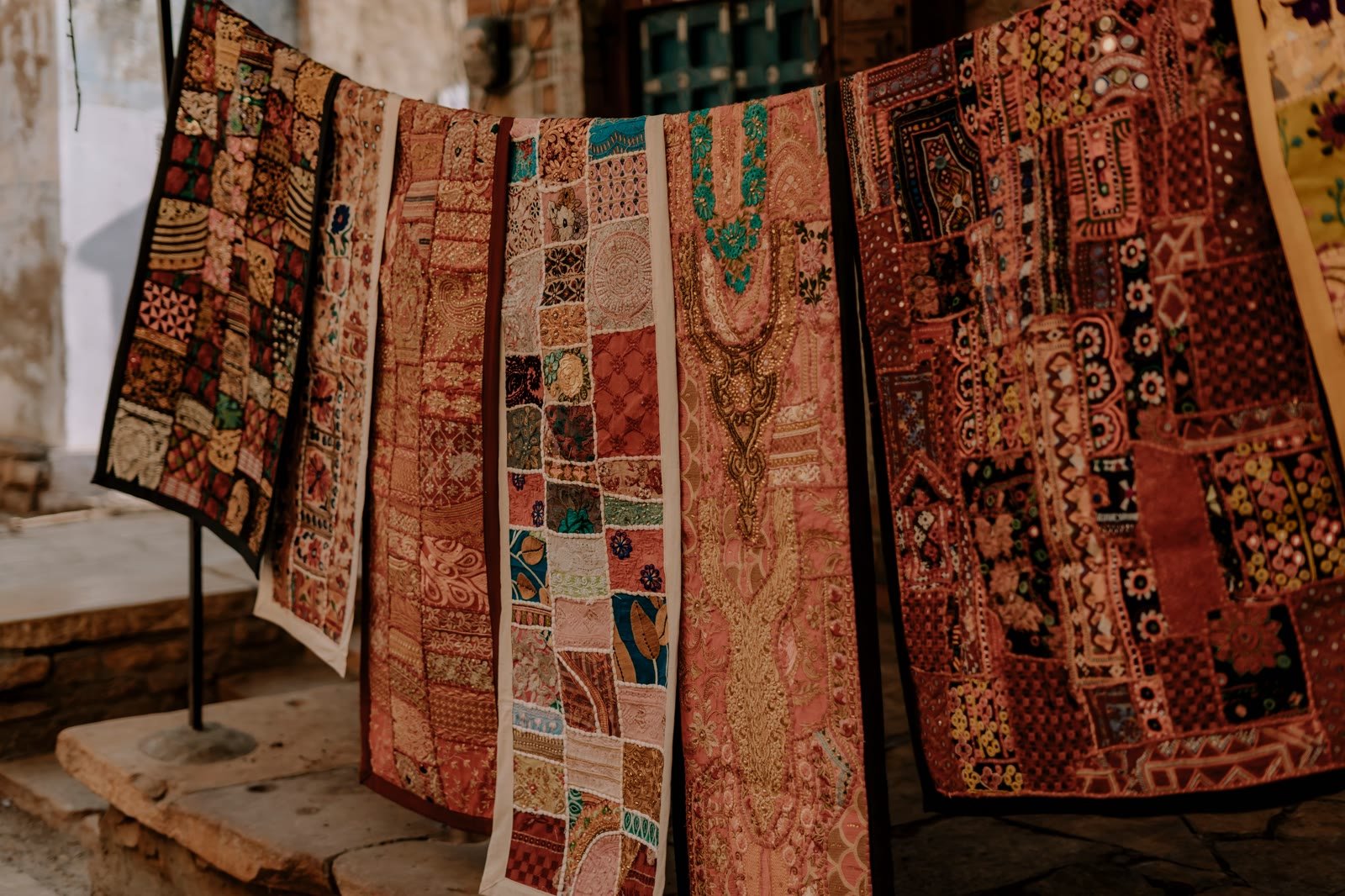
Notes from the house on the weaves we carry, the towns that keep them alive, and how to tell a cloth made by hand from one that only looks it.
✦
01 · Varanasi, Uttar Pradesh
The gold thread of Banaras
A Banarasi saree is not printed, embroidered or applied. The pattern is built into the cloth as it is made, one pick at a time.
What gives a Banarasi its weight is zari — a fine thread of flattened metal wound around a silk core — carried across the loom as an extra weft alongside the ground silk. The motif is not laid on top of the fabric; it is the fabric, which is why a good Banarasi drapes with that particular heaviness and why the reverse of the cloth tells you almost as much as the front.
There are two ways to put a motif in. In kadhwa, each motif is woven as its own small unit, so nothing runs behind the plain ground between them — slower, costlier, and clean on the reverse. In cutwork, the extra weft floats right across the width and the floats are clipped away afterwards, leaving short whiskers on the back. Neither is a fake. But a cloth sold as kadhwa should look like kadhwa when you turn it over.
The motif vocabulary — buta and bel, the vine borders, the jhallar at the pallu, the hunting scenes of a shikargah — carries the Mughal-era court aesthetic that settled into Varanasi's workshops and never left.
On the ghats of the Narmada, a queen set up looms. Two and a half centuries later they are still running.
Maheshwar is a fort town on the Narmada in Madhya Pradesh, and its weaving is bound up with Ahilyabai Holkar, who ruled from there in the eighteenth century and brought weavers in to make cloth for the court and for gifts of state. The craft survived the court that started it.
The signature of a Maheshwari is its reversible border — woven so that it reads correctly from either face, which means a saree has no wrong side to hide. The ground is typically a cotton-and-silk mix: silk in one direction for sheen and fall, cotton in the other for breath and body. It is a hot-weather cloth that still looks formal, which is a rare combination.
The patterning is quiet by Indian standards — stripes, checks, narrow bands, small geometric butis — and much of it is drawn from the carving on the fort and temple walls above the river. If you want a handloom saree that can be worn to work, this is usually the one.
The famous transparency is not a finishing trick. It comes from leaving something out.
Raw silk arrives coated in sericin, a natural gum. Most silk is degummed before weaving, which softens it and makes it matte-white and manageable. Chanderi's weavers traditionally keep that gum on the yarn, and it is the un-degummed filament — glassy, springy, slightly stiff — that gives the finished cloth its cool sheen and its famous near-transparency.
That choice is also why Chanderi behaves differently on the body. It holds air rather than clinging, so it sits away from the skin, and it takes a crisp pleat that a softer silk will not. The trade-off is fragility: it is a fine cloth and wants gentle handling.
The classic Chanderi is a sheer ground scattered with small woven butis — coin, lotus, peacock — with a plain or zari-banded border. Cotton, silk and cotton-silk versions all exist; the cotton-silk is the everyday one.
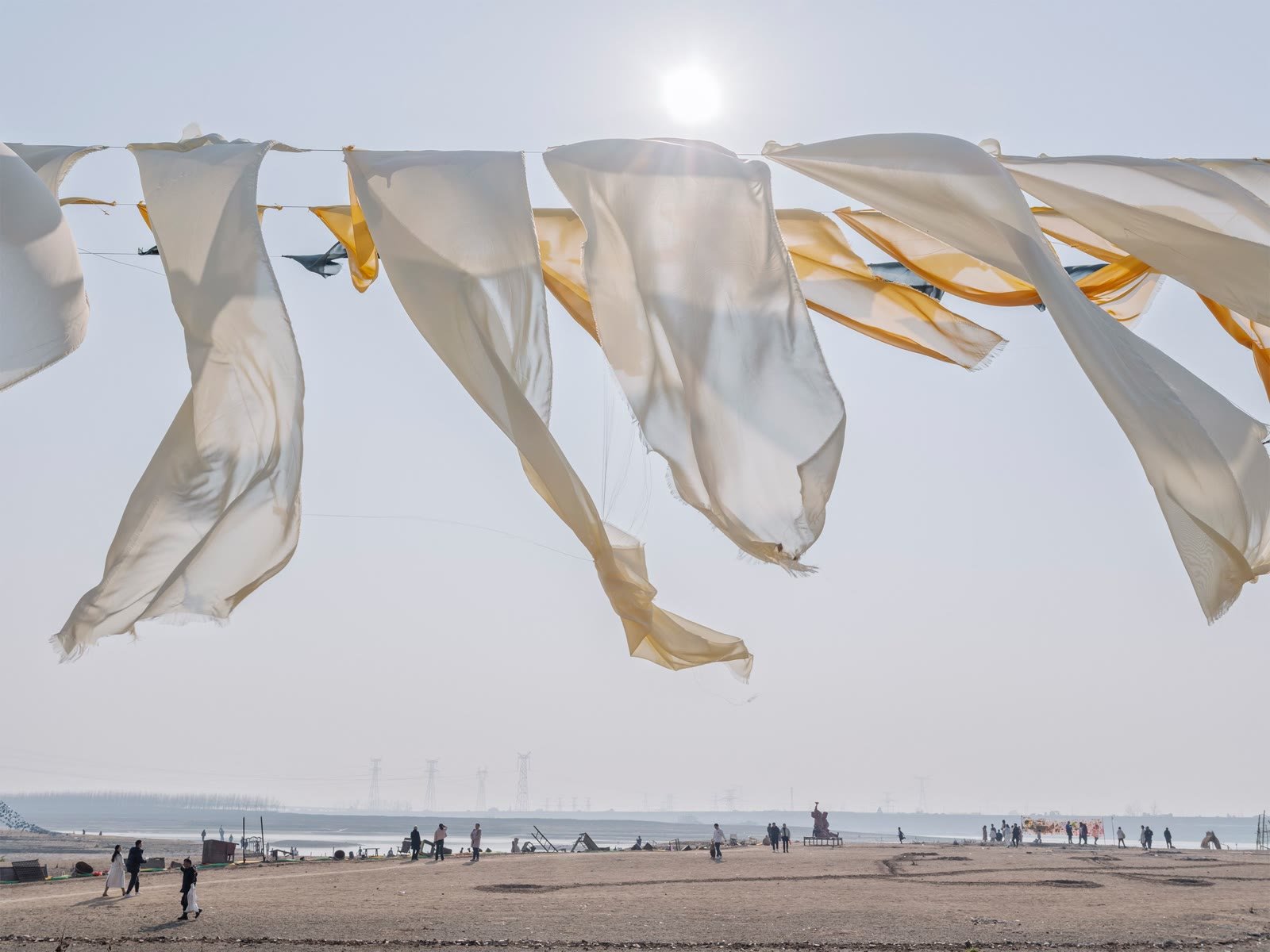
Woven lengths drying. Photography from our own weaving clusters is in progress.See Chanderi in the shop →
04 · Patan, Gujarat
Patan's impossible cloth
In a Patan Patola the pattern exists before the cloth does. It is dyed into loose thread, then reassembled on the loom.
Ikat means resist-dyeing the yarn before weaving: sections are bound off so the dye cannot reach them, and the pattern appears only when the threads are laid out in order. Most ikat does this to one set of threads. Patan Patola does it to both — warp and weft — which is why it is called double ikat, and why it is one of the hardest textiles in the world to make.
Everything hangs on registration. Each dyed segment of weft has to land against its matching segment of warp, and the weavers nudge the alignment by hand as the cloth grows, pick by pick. There is no undo. A single saree can occupy a family for many months.
The craft has been held for generations by a small number of families in Patan, and the classic patterns — elephants and parrots, the ratanchowk and navratna grids — are as much a signature as anything in European couture. A true Patan Patola has no reverse: both faces are the same.
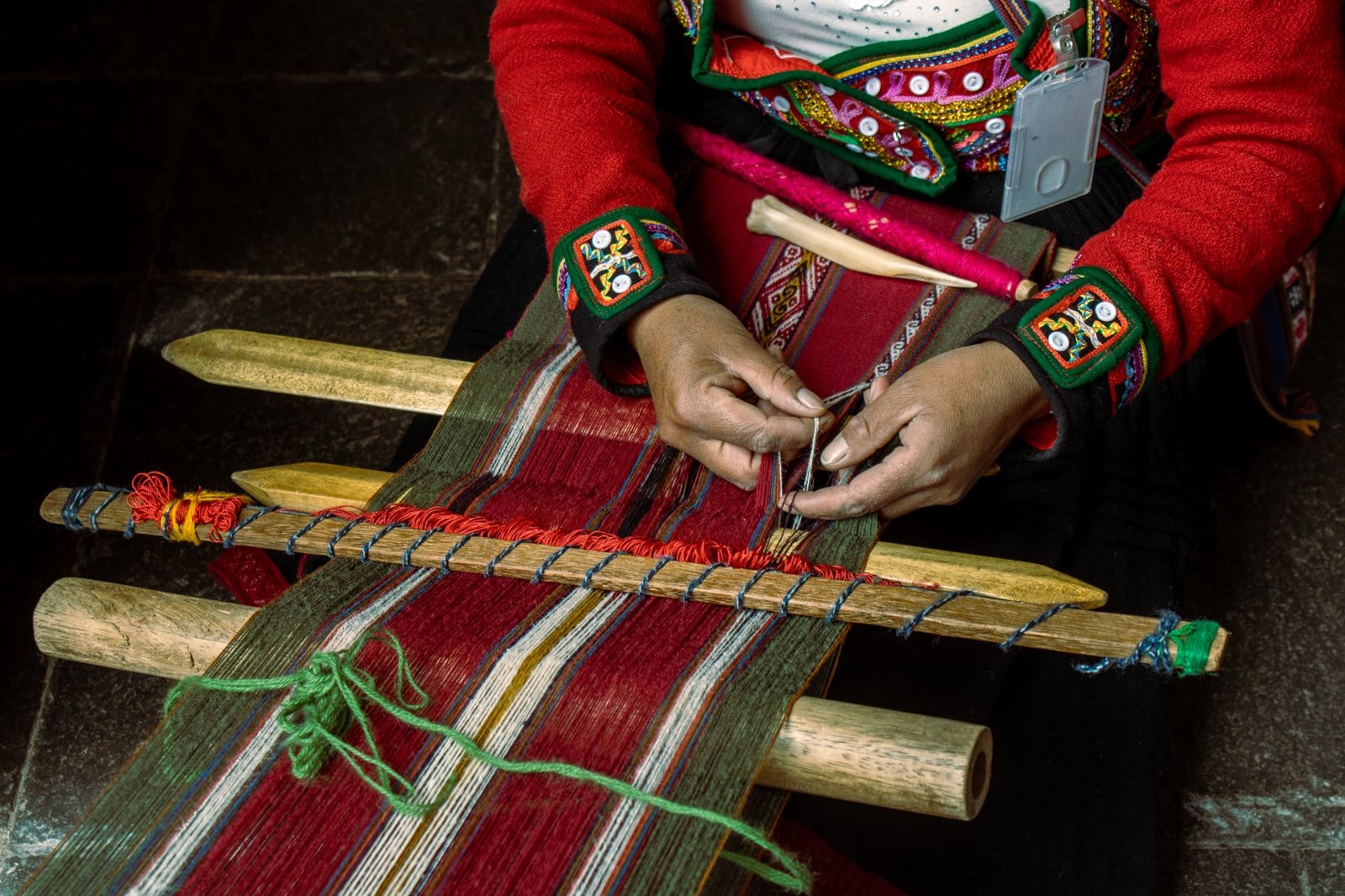
No jacquard, no punch cards, no drawing pinned to the loom. The motif lives in the weaver's head and goes in by hand.
Jamdani is a discontinuous supplementary weft technique. Alongside the ground weft that makes the cloth, the weaver introduces extra lengths of thread — often thicker, sometimes gold — only where a motif needs them, working them in with a fine stick or the fingers and turning them back at the edge of the shape. Because the thread never travels the full width, the motifs appear to float within the fabric rather than sit on it.
It is done from memory. Two weavers commonly work one loom, counting the ground threads for each motif as they go. A dense Jamdani can take months, and the traditional art of Jamdani weaving was inscribed on UNESCO's list of the Intangible Cultural Heritage of Humanity in 2013.
Hold one up to the light: the ground should be almost gauzy, and the motifs should be readable from the reverse — slightly softer, but present. That reverse reading is the quickest honest test there is.
Five things you can check in a shop, with nothing but your hands and a window.
Turn it over. A handwoven brocade tells the truth on the back — clipped float ends, small irregularities, the honest structure of the weave. A printed or embossed imitation usually has a blank, unrelated reverse.
Look for the small wrongness. A slight variation in the width of a stripe, a motif a hair out of line, a thread slightly thicker than its neighbours. Machines are consistent. Hands are not, and that inconsistency is the signature.
Hold it to the light. Handspun and handwoven yarn is uneven in diameter, so the cloth shows faint variation in density across the width. A powerloom fabric is flat and even against a window.
Feel the selvedge. Handloom edges are usually firm and slightly thickened, and they will not be perfectly straight along the full length.
Ask where it is from. A real answer names a town, and usually a cluster or a family. If nobody can tell you where a cloth was woven, that is itself the answer.